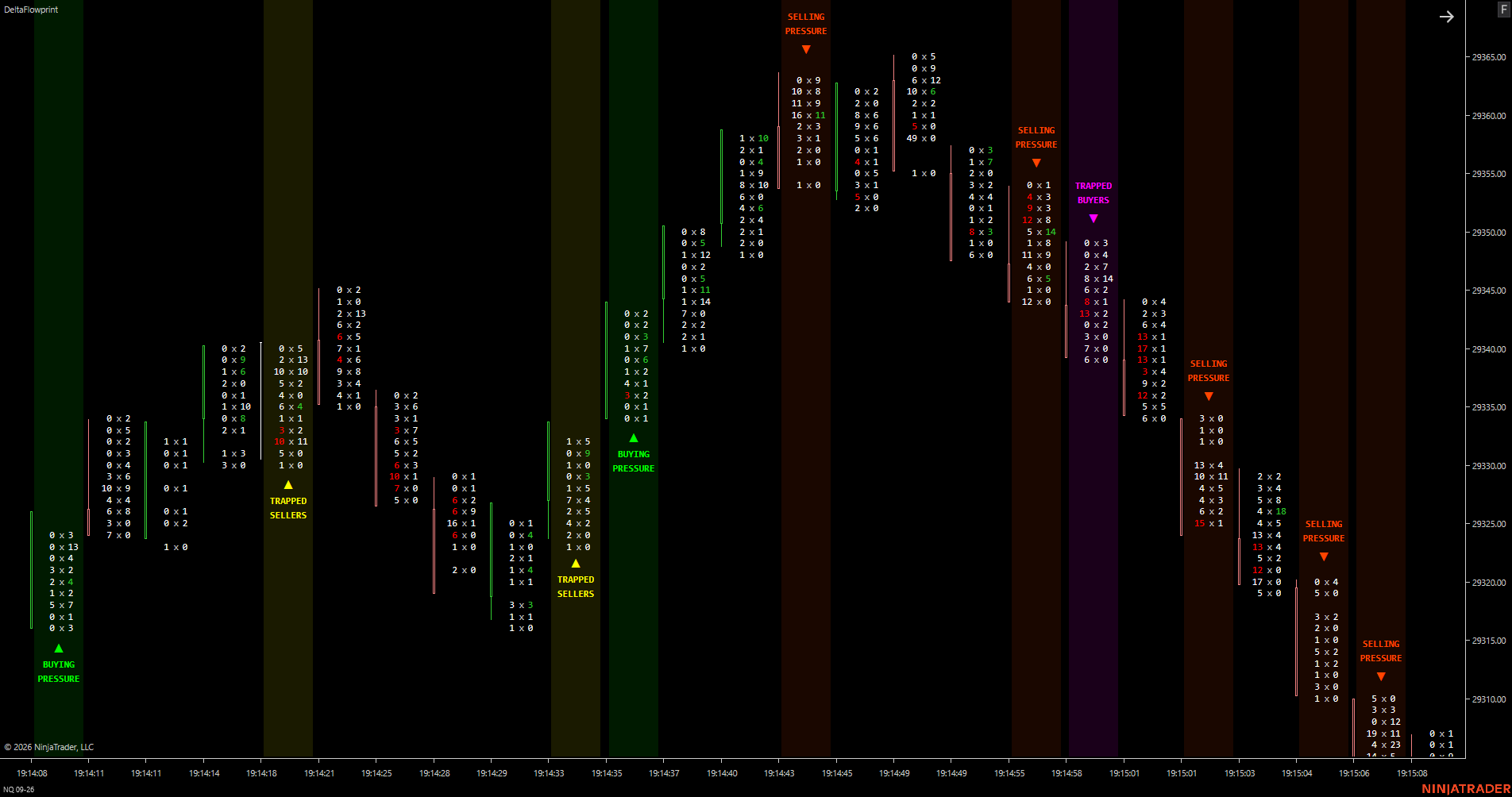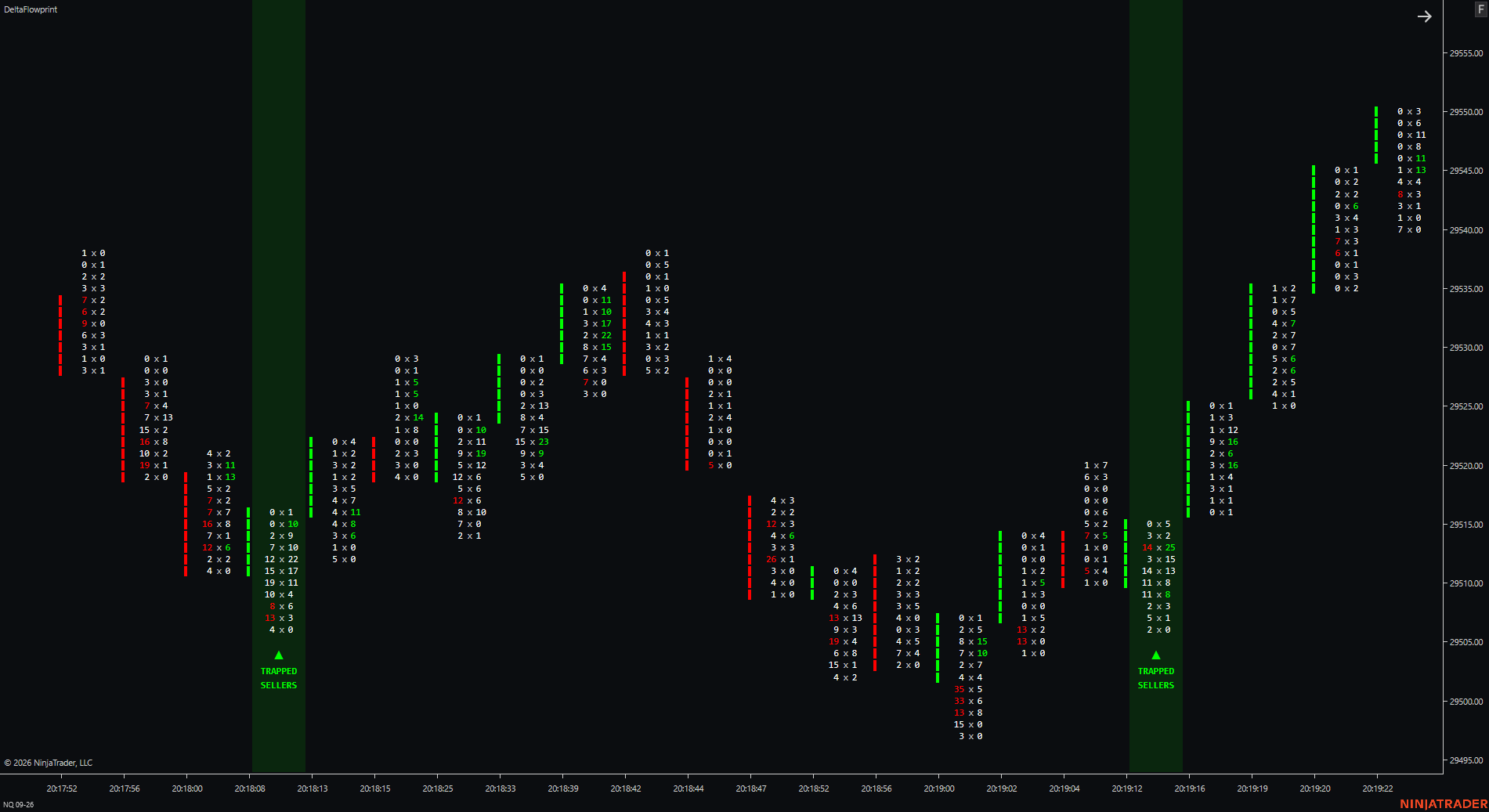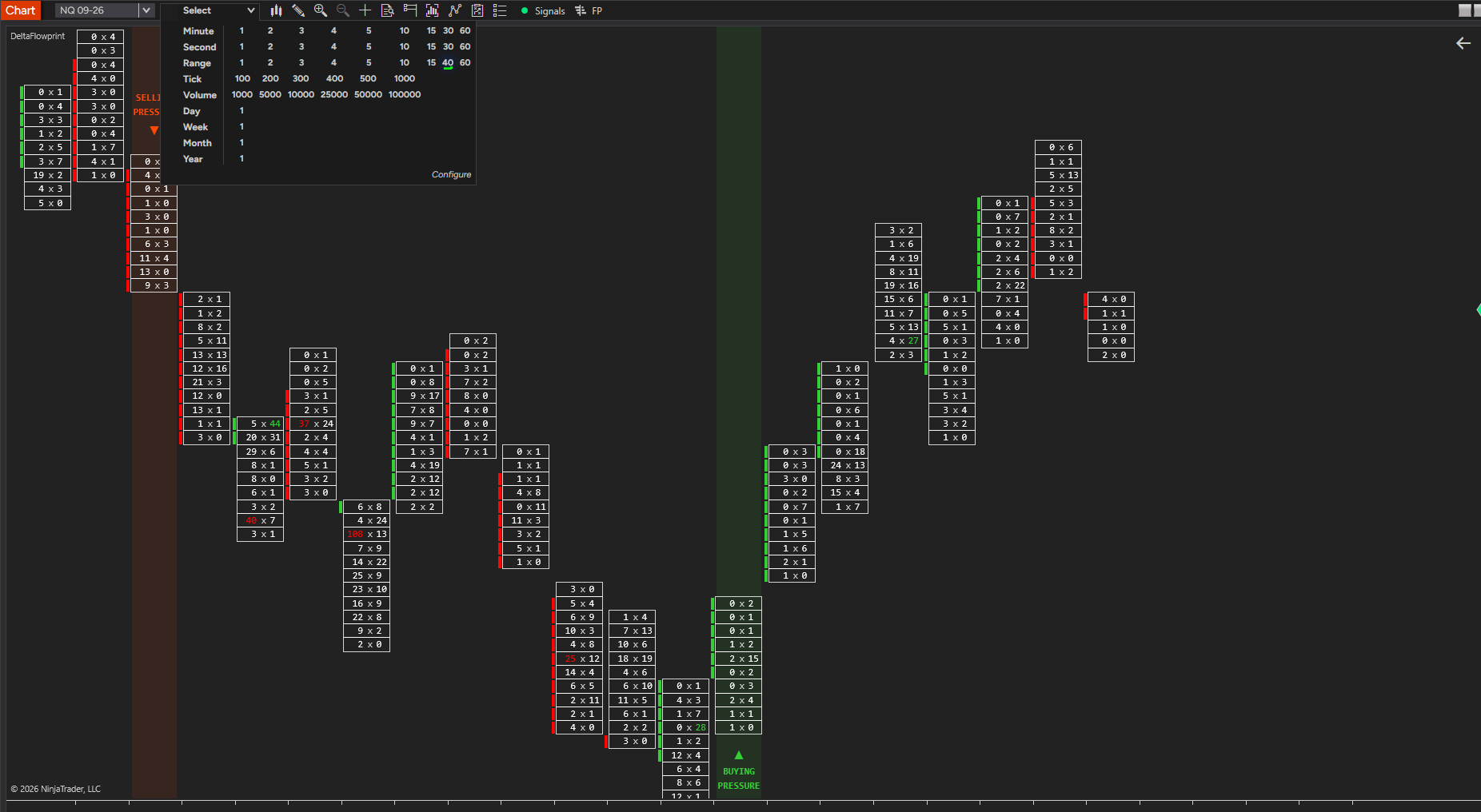
Every sweep of a range high or low looks like a stop hunt in hindsight. The problem is telling a genuine liquidity grab from the first leg of a real breakout while the bar is still building — and NQ's speed makes the cost of guessing wrong higher than on slower instruments.
Why the sweep alone isn't enough
A sweep just means price traded through a level that had resting stops. That happens constantly and most of the time price keeps going. The sweep is necessary but not sufficient — what makes it fadeable is what happens in the ticks immediately after.
The confirmation: absorption at the extreme
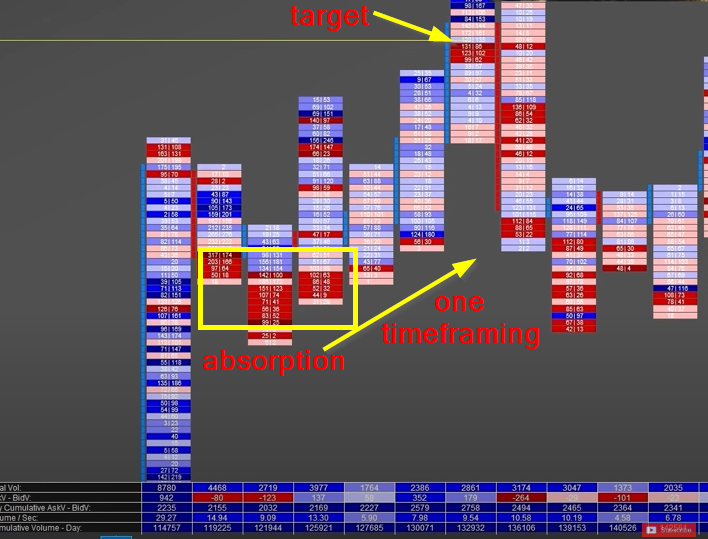
A genuine stop-hunt fade shows heavy volume trading at the extreme tick of the sweep without further price progress — the Big Trade Detection mode is built for exactly this, filtering out everything except the large orders that indicate size stepping in to absorb the stops rather than joining the breakout.
Sizing the fade
Because NQ moves fast, this is a scalp, not a swing. A tight stop just beyond the wick and a 10–15 point target on the fade keeps the risk-to-reward sane given how quickly the setup can invalidate if the absorption turns out to be the first bar of a real breakout instead.
When to skip it entirely
If the sweep happens on a Buying/Selling Pressure signal already confirming the breakout direction on the higher timeframe, skip the fade. Fighting a pressure signal and a sweep at the same time is fighting two confirmations instead of reading one.